A leaning tree can be easy to overlook until it starts drifting a little too close to your house. Out of concern, that’s usually when the question pops up: “Are leaning trees dangerous?” In some cases, the lean is harmless. But other times, it signals a structural issue you shouldn’t ignore, especially when the tree is hovering right above your home.
To determine the level of risk, it’s important to assess the tree’s safety and integrity. And the good thing is, you don’t have to be an arborist to do it. You just need a solid grasp of what’s normal for trees, what isn’t, and when it’s time to call a professional like Eastside Tree Works to step in.
In this guide, you’ll learn how to identify potentially unsafe leaning trees, understand the causes behind them, and decide when tree removal might be the best move.
Why Trees Lean in the First Place
Trees rarely develop a lean at random. They typically develop a lean in response to something in its environment. This is why it’s important to understand the reason behind the shift to help you determine whether it’s safe or an indication of instability.
Natural Lean vs. Problematic Lean
Some trees grow with a natural lean from the moment they sprout. They adapt over time, developing stronger roots and thicker trunks to maintain their stability. But not all leans are created equal:
- A natural lean usually develops in trees that grow toward sunlight. If obstacles block light on one side, such as a fence, house, or another tree, your tree may gradually bend to chase the brightest path. A natural lean is safe when:
- The trunk curve is gentle and consistent.
- The lean hasn’t changed noticeably over the years.
- The tree has an even, healthy root flare at its base.
- A problematic lean usually happens suddenly and tells a different story. This type of tilt can signal structural weakness, root failure, or internal decay. Here are some indications that a lean is dangerous:
- The lean appeared suddenly after a storm or wind event.
- The soil around the base is raised, cracked, or otherwise disturbed.
- The tree is leaning directly over your house or garage.
If you’re dealing with a sudden lean, it’s smart to bring in experts like Eastside Tree Works right away. They can quickly evaluate whether leaning tree removal is necessary.
How to Assess Tree Safety on Your Own
To ensure the safety and stability of a leaning tree, you can do a quick at-home evaluation. This can help you understand the urgency of the situation and determine the best course of action:
- Compare the Current Lean to Old Photos: Scroll through old photos of your home. Does the tree look more tilted today? Even a few inches can be significant.
- Look at the Base and Root Flare: The base of the tree should look grounded and firm. If one side appears to be lifting or splitting, that’s a sign of instability.
- Check the Soil Condition: Over-saturated soil or erosion can cause trees to shift or sink into the ground. After heavy rainstorms, pay extra attention.
- Inspect the Canopy: If most branches grow heavily on one side, it can throw off the tree’s balance and worsen the lean.
- Listen for Creaking: It sounds odd, but leaning trees sometimes make noise in the wind. Creaking or cracking noises can signal internal fractures.
Warning Signs You Shouldn’t Ignore
Here are some indicators to watch out for that a leaning tree might be dangerous:
- The lean is increasing over time
- Visible soil displacement near the base
- Broken or hanging branches
- Sudden foliage loss
- Root exposure
- Deep trunk cracks
- Fungus or mushrooms near the base
- A lifted root plate, indicating the tree is shifting
If you’re seeing more than one of these signs, it may be time to consider leaning tree removal.
When Should You Call a Professional?
While you can do an initial review of a leaning tree, there are limits to what you can safely evaluate on your own. When the risks become unclear or the lean appears to be worsening, involving a professional can ensure you’re making the right call, whether that means stabilization or removal.
What Professionals Look For
When a certified arborist, such as Eastside Tree Works, evaluates a leaning tree, the inspection focuses on its health, structural stability, and proximity to nearby structures. They may assess:
- Trunk soundness, including internal decay
- Soil conditions around the base
- Root integrity and anchoring
- Visible structural defects
- Species characteristics that influence how the tree responds to stress
The purpose of the evaluation is to determine whether the tree can remain safely in place or whether its condition presents a significant risk to your home.
Leaning Tree Removal: What to Expect
If a professional determines that leaning tree removal is the safest option, you may wonder what the process entails.
Here’s a simple breakdown:
- Assessment: They’ll begin by examining nearby structures, angles of lean, and any hazards.
- Safety Setup: Ropes, harnesses, cranes, and other equipment keep the crew and your property safe.
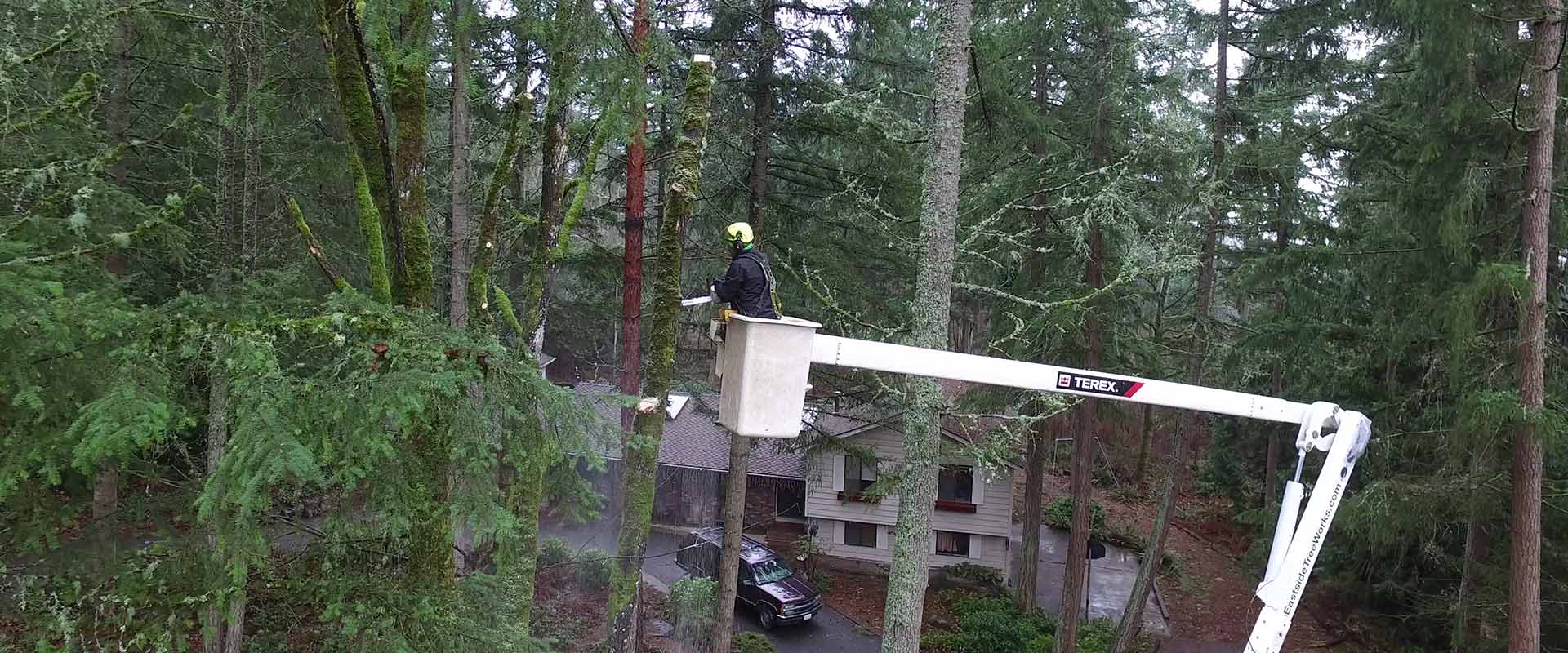
- Strategic Cutting: Experts remove the tree in sections, lowering each piece carefully. This is especially true for leaning trees over the house.
- Cleanup: Branches, wood, and debris are removed, leaving the area clean and hazard-free.
- Stump Options: You can choose stump grinding or complete stump removal if you want a level yard.
Leaning tree removal isn’t a DIY project. With unpredictable weight distribution and the risk of collapse, only trained experts should handle it.
Preventing Tree Lean Before It Becomes an Issue
The old adage “prevention is better than cure” can also apply to leaning trees. One of the best ways to protect your home and property from danger is to prevent leaning in the first place. Here are some easy maintenance strategies you can apply:
- Regular Pruning: Removing dead or heavy limbs helps distribute weight evenly.
- Soil Aeration: Compacted soil suffocates roots. Aerating the ground allows better airflow and water absorption.
- Avoid Overwatering: Too much water weakens the soil and root strength.
- Mulching: Keep mulch away from the base of the trunk, as piling it too high encourages rot.
- Professional Tree Checkups: A yearly inspection from Eastside Tree Works can help you identify issues before they become costly repairs.
Safeguard Your Property with Eastside Tree Works
If you’re concerned about a leaning tree near your home, the safest step is to bring in trusted professionals who can protect your property and determine the right solution.
Eastside Tree Works provides detailed evaluations that identify whether a tree can be stabilized or if removal is necessary to prevent damage. We assess the tree’s structural integrity, surrounding conditions, and overall health to keep your home secure.
